
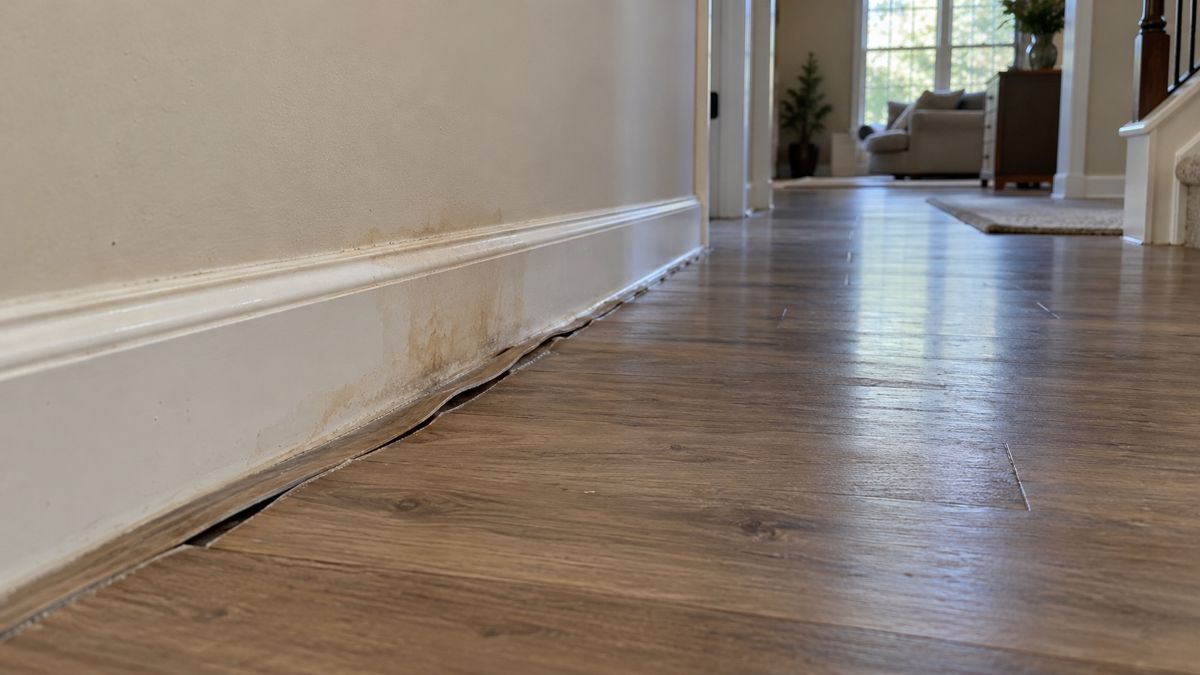
The most common signs of a hidden slab leak are a water bill that climbs for no clear reason, the sound of running water when every tap is off, warm spots on the floor, damp or lifting flooring, and a water meter that keeps moving when nothing is in use. One sign alone may have a simple cause. Two or more together are a good reason to test the line and call a plumber.
This guide explains what a slab leak is, how to check for one at home, why they happen in South Fulton houses, and what to do if you think you have one.
What is a slab leak?
A slab leak is a leak in a water line that runs under or through the concrete slab your house sits on. The pipe is buried, so water can escape for a long time before anything shows on the surface. By the time a stain appears, the leak may have been running for weeks.
Many homes in South Fulton were built between the 1990s and the 2010s, and plenty of them sit on concrete slabs. Others have a crawlspace or a mix of both. Not every slab house has water lines under the concrete, because some builders ran the supply pipes through the attic or walls. A plumber can tell you which setup your home has. If your supply lines do run under the floor, a leak there is hard to see and easy to miss.
Which signs point to a slab leak?
A higher water bill with no explanation
This is often the first clue. If your bill jumps and you have not had guests, filled a pool or watered the lawn more, compare it with the same month last year. A steady rise over two or three bills is worth checking.
The sound of running water
Stand in a quiet room with everything off, including the dishwasher, washer and ice maker. A faint hiss or trickle from the floor or walls can mean pressurized water is escaping.
Warm spots on the floor
A leak in a hot water line can heat the concrete above it. If one patch of floor feels warm under bare feet, especially in a room far from the water heater, pay attention.
Damp carpet, lifting boards or loose tile
Moisture coming up through the slab can soak carpet from below, make wood-look flooring buckle at the seams, or loosen tile and grout. Baseboards that swell or stain along one wall are another warning.
Low water pressure and a musty smell
If pressure drops at several faucets with no reason, or a damp odor builds in a room, water may be going somewhere it should not. Mold growth along baseboards can follow.
How can I check for a leak at home?
You can do a basic test in about half an hour without any tools.
- Turn off every fixture and appliance that uses water. Check that no one is running a shower or the washer.
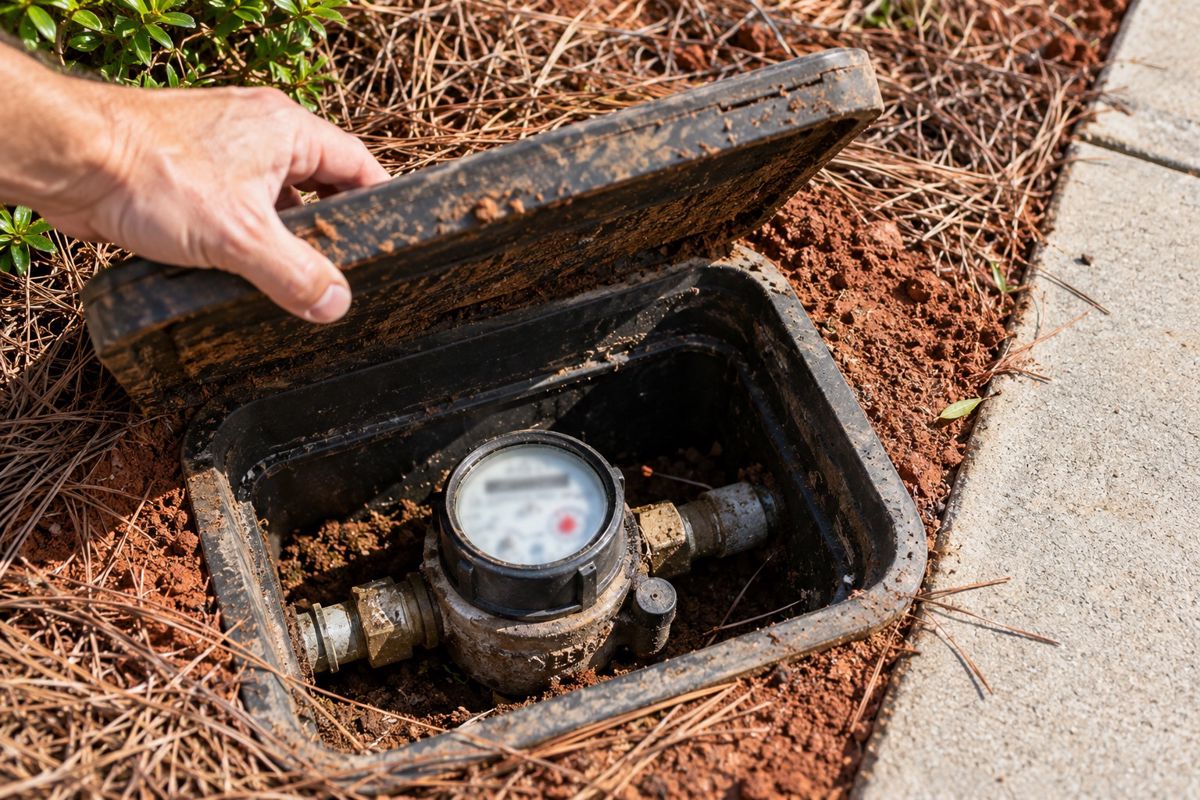
- Find your water meter, usually in a box near the street or driveway. Lift the lid.
- Look at the small low-flow indicator, often a triangle or a small dial. If it is turning, water is moving through the meter.
- Write down the meter reading, wait 30 minutes with everything still off, and read it again.
- If the reading has changed, water is escaping somewhere in the system.
A moving meter does not prove a slab leak. It could be a running toilet, a dripping outdoor spigot, an irrigation valve or a leak in a wall. Check toilets by adding a few drops of food coloring to the tank and seeing if color shows up in the bowl without flushing. Look at hose bibs and the water heater area as well. If none of these explain it, a hidden line is likely.
Why do slab leaks happen in South Fulton?
Slab leaks happen everywhere, but a few local conditions raise the odds.
- Red clay soil. Georgia clay swells when it is wet and shrinks in dry spells. Slabs and the pipes beneath them can shift a little over time, and that movement stresses joints.
- Pipe material. Many homes from this era use copper, which can develop pinholes from corrosion. Some homes from the 1990s may still have polybutylene, a gray plastic pipe used until the mid-1990s that is known for failures. Ask a plumber to identify what you have.
- Abrasion. Pipes expand and contract as hot and cold water moves through them. Over time, they can rub against concrete or gravel and wear through.
- High water pressure. Pressure above the usual range puts constant strain on lines and joints.
- Construction damage. A small nick or a weak joint made when the house was built can fail much later.
What should I do if I think I have a slab leak?
Act quickly, but stay calm. A slab leak is rarely a sudden flood, but it can do slow damage to floors, walls and the soil under the house.
- Confirm it. Run the meter test and rule out toilets, spigots and irrigation.
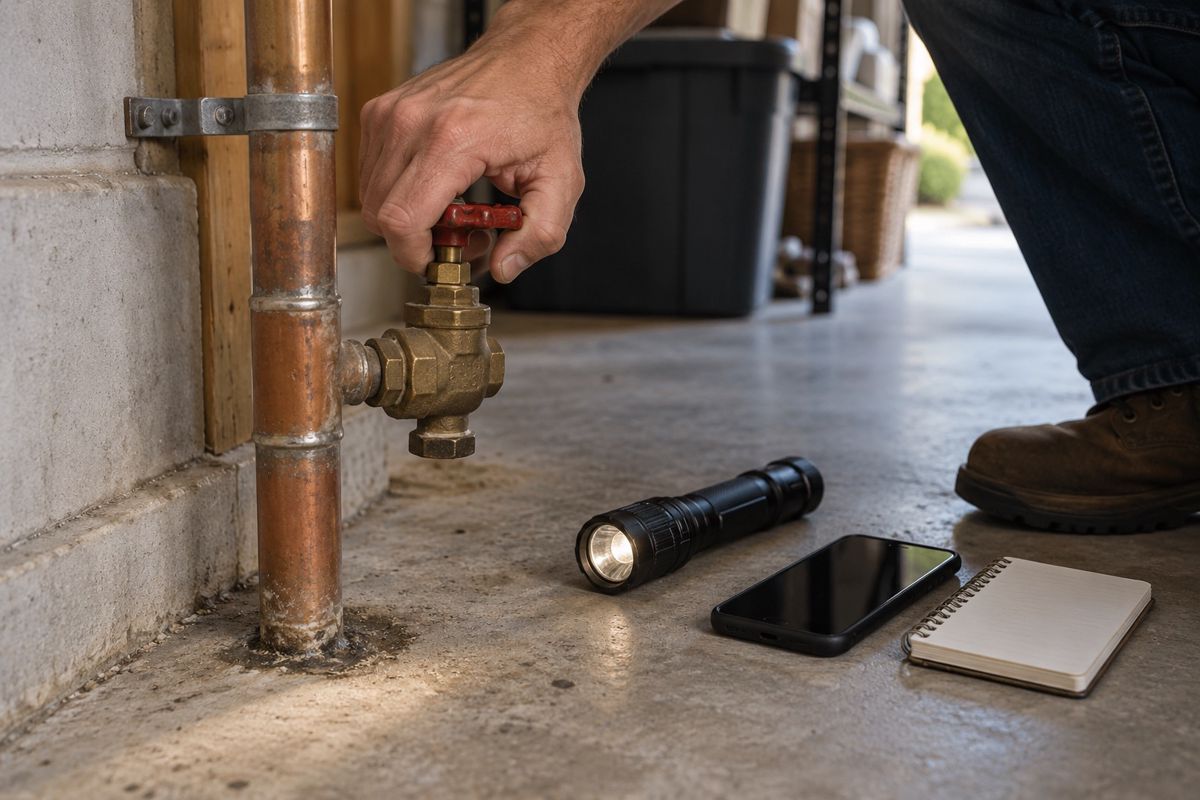
- Shut off the water if you can wait for service. If the leak is large, close the main shut-off valve until a plumber arrives. Many homes have it in the garage, a utility closet or a box near the street.
- Document it. Take photos of damp areas and write down meter readings and dates. This helps if you make an insurance claim.
- Call your insurer early. Coverage for slab leaks varies. Some policies cover resulting water damage but not the cost of repairing the pipe itself. Ask what your policy says.
- Call a plumber who tests first. Pressure tests, electronic listening gear and thermal imaging can pinpoint a leak so that only a small area of floor is opened.
What affects the cost and the time it takes?
No honest plumber can give a price without testing. These factors drive the final bill:
- How many leaks there are and how deep the pipe lies.
- Whether you choose a spot repair, rerouting the line through the attic or walls, or whole-house repiping.
- The flooring on top, since tile and hardwood cost more to restore than carpet.
- The pipe material and the size of the house.
- Permits, where your city or county requires them.
A single spot repair may take a day or two. Rerouting or repiping a whole house can take several days, and you may be without water for part of each day. Ask for the price of each option in writing so you can compare them. A repipe may make sense if you have had repeat leaks or the pipe has a poor record.
When should I call a plumber?
Call as soon as the meter test shows movement and you cannot find an obvious cause, or when you see warm floors, damp flooring or a rising bill together. Waiting rarely helps. Constant moisture can soften the soil under a slab, and clay is already prone to moving.
If water is spreading across a floor right now, shut off the main valve and see our page on emergency plumbing repair. For testing and repair options, read about slab leak detection and whole-house repiping in South Fulton. We explain what we find, show you your options and give you a written quote before any work starts.