Skip to content
Open 24/7Upfront pricing
Call now (470) 555-0100
South Fulton, GA (470) 555-0100

Sewer lines in South Fulton, GA

Sewer line repair in South Fulton, from spot fixes to trenchless

Backups, smells and soggy patches in the yard can mean a damaged sewer line. We find the problem first and explain your repair options before anything is dug.

(470) 555-0100 Call now
  • Camera inspection before any digging
  • Spot repair, trench or trenchless explained
  • Written quote before work starts
Request a plumber
How soon do you need help?

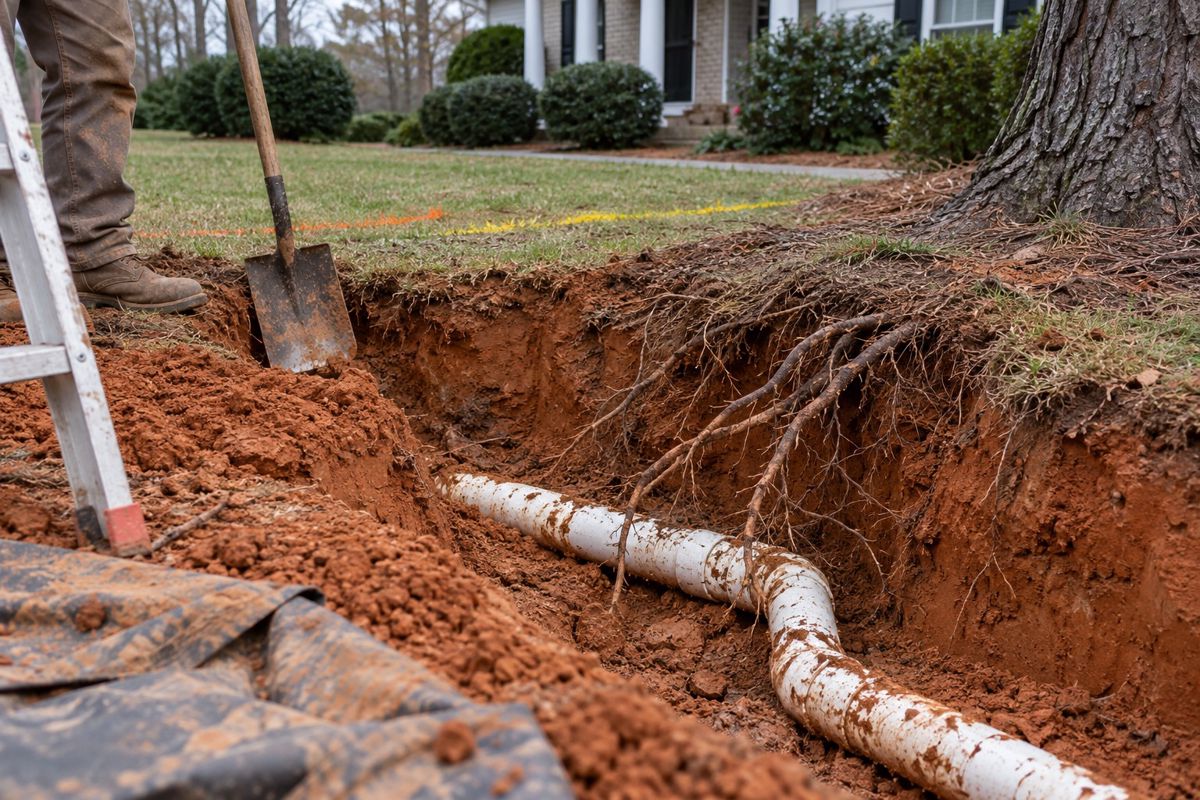
Open trench in a front yard showing a white sewer pipe and tree roots

What are the signs of a damaged sewer line?

The sewer line carries wastewater from your house to the public sewer or a septic system. When it is cracked, blocked or collapsed, you will often notice:

  • Slow drains in more than one fixture, or gurgling when water runs.
  • Sewage smells indoors or in the yard.
  • Sewage backing up into the lowest tub, shower or floor drain.
  • Soggy, unusually green or sunken patches in the yard.
  • Cracks or settling in a walkway or slab near the line.

These signs can also come from a simple clog, so cleaning is often tried first. See drain cleaning and hydro jetting. If the problem returns soon after, the pipe itself is the likely cause and it is time for a closer look.

What damages sewer lines in South Fulton?

Several local conditions put stress on buried pipes.

  • Tree roots. Mature oaks, pines and sweetgums are common in the area. Roots follow moisture and grow into joints in the pipe.
  • Red clay movement. Georgia clay swells when wet and shrinks in dry spells. Over time, this can shift pipes, create low spots called bellies, or pull joints apart.
  • Poor bedding or backfill. If soil around a pipe settles after construction, the pipe can sag.
  • Older materials. Most homes from the 1990s onward use PVC, which holds up well. Older neighborhoods may have clay or cast iron pipe that cracks or corrodes. A camera inspection will show what you have.
  • Heavy loads. Driveways, new construction and heavy equipment above the line can crush a weak pipe.

How do plumbers find the problem?

Guessing leads to digging in the wrong place. The standard approach is a camera inspection. A small camera on a flexible cable is fed into the line through a cleanout or a vent. It shows cracks, offsets, roots, low spots and breaks, and it gives you a record of the pipe condition.

A locator can then trace the camera signal to the surface to mark the depth and position of the problem. That tells you how much digging is involved before you make any decision. Ask to see the footage or photos, and ask the plumber to explain what you are looking at. If someone recommends a full replacement without showing you the inside of the pipe, get a second opinion. For urgent backups, start with emergency plumbing repair.

Spot repair

If only one section is broken, the plumber digs down to that spot, replaces it and reconnects the pipe. This is often the least costly option when the damage is limited and easy to reach.

Open trench replacement

The old pipe is dug out and replaced with new pipe. It works in most conditions but disturbs lawns, driveways and landscaping.

Trenchless repair

Trenchless methods, such as pipe lining or pipe bursting, replace or rehabilitate the pipe through small access holes instead of a long trench. They can save a yard, walkway or driveway. They are not right for every pipe. A badly collapsed or heavily offset pipe, or one with severe low spots, may still need digging.

Ask which methods fit your pipe and why, and ask what the yard will look like afterward.

What affects the cost, and how long will it take?

The price depends on a few things.

  • The length and depth of the damaged section.
  • The repair method you choose.
  • What sits on top of the pipe. Grass is simple. Concrete and mature trees are not.
  • Whether a permit or inspection is required in your jurisdiction. Rules vary, so ask.
  • Access to cleanouts and the connection to the main.

A short spot repair may take a day. A longer replacement can take a few days, including cleanup. Call 811 before any digging so buried utilities are marked. A plumber will usually arrange this or ask you to. Responsibility for the pipe usually covers the section from the house to the connection with the public main, but this varies by property, so check with your sewer provider. We give a written quote before work starts. Return to the South Fulton Plumbing home page, or read about slab leak detection if you think the problem is under the house.

How soon do you need help?

Questions about emergency plumber in South Fulton

Who is responsible for the sewer line?

In general, the homeowner is responsible for the pipe from the house to the point where it joins the public main, and the sewer provider handles the main itself. The exact boundary varies by property and provider. Before you pay for a repair, contact your sewer provider to confirm where your responsibility ends.

How do I know if I need a camera inspection?

A camera inspection is a good idea when drains keep clogging after cleaning, when sewage backs up in more than one place, or when you notice wet patches in the yard. It is also worth doing before buying a home. It shows the condition of the pipe so you can decide on repairs with real information.

Is trenchless repair always the better choice?

No. It can protect a yard or driveway and save time, but it only works when the pipe can be lined or burst through. A collapsed or heavily offset pipe may need to be dug up. Ask the plumber to show why a method fits your pipe, and ask for the price of each option.

Can tree roots really break a sewer line?

Roots usually grow into a pipe through small cracks or loose joints, because the water and nutrients inside attract them. As they grow, they widen the opening and trap waste, causing clogs. Over time, they can break the pipe. Cleaning can clear roots for a while, but a damaged joint will need repair.

Does homeowners insurance cover sewer line repair?

Often not. Standard policies commonly exclude wear, tree root damage and the cost of repairing the pipe, though some cover resulting water damage or offer an optional add-on. Read your policy or ask your insurer before work begins, and keep the camera footage and written quote for your records.

Can I keep using water if the sewer line is blocked?

It is best to limit water use until the line is cleared, because every flush, shower and load of laundry adds to the backup. Avoid running the washer and dishwasher. If sewage is already coming into the home, keep people and pets away from the area and call a plumber.

  • Open 24/7
  • Upfront pricing
  • Clear communication
  • Local plumbers

Ready when you are. Call now or request a quote online.

How it works

1

Call or tap for help

Tell us what is wrong. We answer around the clock.

2

Plumber dispatched

The nearest plumber heads your way with a stocked van.

3

Fixed with a written price

You approve the price before any work starts.