Skip to content
Open 24/7Upfront pricing
Call now (470) 555-0100
South Fulton, GA (470) 555-0100

Slab leaks and repiping in South Fulton, GA

Slab leak detection in South Fulton, and whole-house repiping

A leak under the floor can run for weeks before you see water. We test to find it, explain your options and give a written quote before work begins.

(470) 555-0100 Call now
  • Leak located before any cutting
  • Repair, reroute or repipe explained
  • Written quote before work starts
Request a plumber
How soon do you need help?

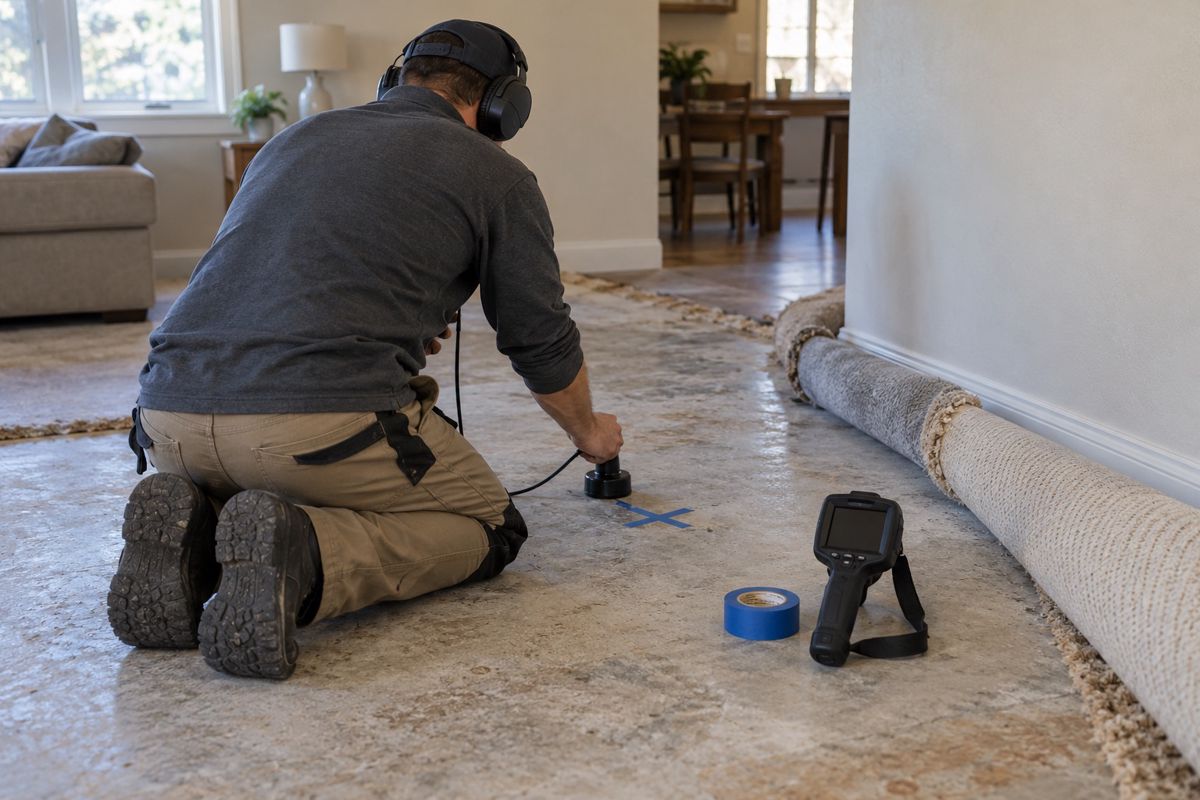
Technician listening for a hidden water leak on a concrete floor

What is a slab leak, and how do I know I have one?

A slab leak is a leak in a water line that runs under or inside the concrete foundation of a house. Because the pipe is hidden, you may not see water at first. Look for these signs:

  • A water bill that rises with no change in how you use water.
  • The sound of running water when everything is off.
  • Warm or hot spots on the floor, which can point to a leaking hot line.
  • Damp carpet, buckling wood-look floors or lifting tile.
  • A musty smell or mold near baseboards.
  • Low water pressure at the faucets.

To check quickly, turn off all water and look at your water meter. If the dial or leak indicator keeps moving, water is escaping somewhere. That does not prove a slab leak, since the leak could be in a wall, an irrigation line or a toilet, which is why testing matters. If water is flooding the floor, shut off the main and see emergency plumbing repair.

Why do slab leaks happen in South Fulton homes?

Slab leaks are not unique to this area, but several local factors make them more likely.

  • Red clay. Clay swells in wet weather and shrinks in dry spells. The slab and the pipes beneath it can shift slightly over time.
  • Pipe age and material. Many homes from the 1990s and 2000s have copper lines that can corrode or develop pinholes. Some 1990s homes may still have polybutylene, a gray plastic pipe used until the mid-1990s that is known for failures, so identifying the pipe type matters.
  • Abrasion. Pipes can rub against concrete or gravel as they expand and contract with hot and cold water.
  • High water pressure. Constant strain on lines and joints.
  • Construction damage. A nick or a poor joint made when the home was built can fail much later.

Not every home here has supply lines under the slab. Some run them through the attic or walls, with only drains under the floor. A plumber can tell what your house has.

How is a slab leak detected?

Good detection avoids breaking up floors where it is not needed. Common methods include:

  • Pressure testing to confirm that water is leaking and to isolate which line is affected, such as hot or cold.
  • Electronic listening equipment that picks up the sound of escaping water through the slab.
  • Thermal imaging, which can show warm patches where a hot line is leaking.
  • Line tracing in harder cases.

Ask the plumber to mark where the leak is on the floor before any cutting begins and to explain how sure they are. Detection results should be shown to you, not just described. If the answer is unclear, a second opinion is reasonable before a slab is opened. A slab leak can also be confused with a problem in a drain line. See sewer line repair if the trouble seems to be on the drain side.

Spot repair

The floor is opened over the leak, the pipe is repaired, and the floor and slab are patched. It makes sense for a single, accessible leak in an otherwise sound system.

Rerouting

A new line is run through the attic or walls to bypass the leaking section, so nothing is cut under the slab. It is often used when the line is hard to reach or when leaks keep returning.

Whole-house repiping

All the supply lines are replaced, typically with PEX or copper. Repiping is worth considering when you have had more than one leak, when the pipe material has a poor record, or when pinholes and discolored water show up in several places. It is a larger job, but it can end the cycle of repeat repairs.

Ask which option the plumber recommends and why, and ask for the price of each so you can compare them.

What affects the cost, and how long will it take?

Several things set the price of this work.

  • The number and location of leaks, and how deep the pipe lies.
  • The flooring on top, whether carpet, tile or wood-look planks.
  • Whether you choose a spot repair, a reroute or a repipe.
  • The pipe material and the size of the home, including the number of fixtures.
  • Restoration of floors, drywall and paint.
  • Permits, where required.

A spot repair can take a day or two. A whole-house repipe often takes several days, and you may be without water for part of each day. Ask the plumber to plan this with you. Water damage coverage varies, so call your insurer early. Some policies cover resulting damage but not the plumbing repair itself. Keep a record of meter readings and dates. We give a written quote before work begins. For other services, visit the South Fulton Plumbing home page.

How soon do you need help?

Questions about emergency plumber in South Fulton

Can I fix a slab leak myself?

Finding and repairing a leak under concrete is not a do-it-yourself job. It needs testing gear, and a wrong guess can mean cutting into the floor for nothing. You can do the meter test and shut off the main valve to limit damage, then have a plumber locate and fix the leak.

How much water can a slab leak waste?

It depends on the size of the leak and how long it runs. Even a small, steady leak can waste a large amount of water over weeks, which is why a rising bill is often the first sign. Because the pipe is under pressure, the leak runs around the clock until it is fixed.

Can a slab leak damage the foundation?

Not usually right away, but constant moisture can wash soil from under a slab or soften it, and clay already moves with the weather. Over time, this can contribute to settling or cracks. That is a good reason to act early instead of waiting to see if the leak gets worse.

Is repiping better than repairing one leak?

Not always. One leak in an otherwise healthy system is often best handled with a spot repair or a reroute. Repiping makes more sense after repeated leaks, with pipe materials that have a poor record, or when pinholes appear in several places. Ask for both prices and the reasoning behind the recommendation.

Will insurance cover a slab leak?

Coverage varies by policy. Some cover the water damage a leak causes but not the cost of repairing the pipe or reaching it. Call your insurer early, take photos, and keep your meter readings and the plumber's written report. Ask your insurer directly what your policy covers.

How long can I wait before fixing a suspected slab leak?

It is best not to wait. Test the meter, and if it keeps moving, have the line checked soon. If the leak is large, shut off the main valve until a plumber can look at it. Delay raises your water bill and can lead to damage to floors and to the soil under the house.

  • Open 24/7
  • Upfront pricing
  • Clear communication
  • Local plumbers

Ready when you are

Call now or request a quote online.

(470) 555-0100

How it works

  1. Call or tap for help

    Tell us what is wrong. We answer around the clock.

  2. Plumber dispatched

    The nearest plumber heads your way with a stocked van.

  3. Fixed with a written price

    You approve the price before any work starts.